Nepal’s Political Realignment and the Tibet Factor: U.S. Strategy to Counter China’s Influence

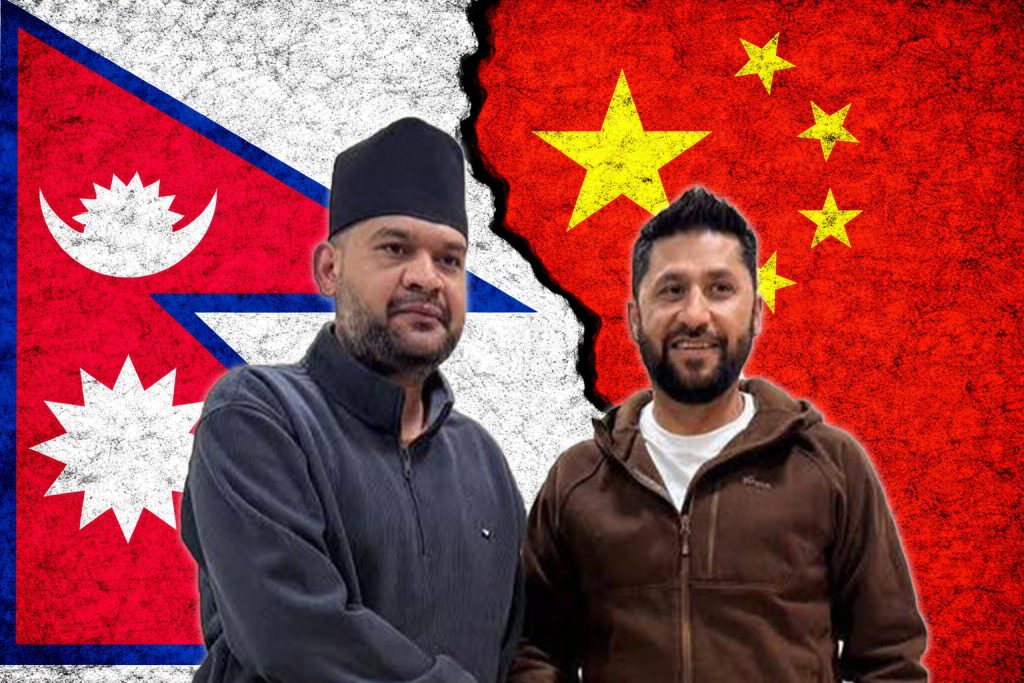
In March 2026, Nepal witnessed its most disruptive political transformation since becoming a republic. The Rastriya Swatantra Party (RSP), an anti-establishment force, a barely four-year-old party, swept the parliamentary elections, winning 182 of 275 seats. Balendra Shah (“Balen”), the 35-year-old former Kathmandu mayor and rapper, became prime minister on March 27. This youth-driven upheaval not only ended nearly two decades of dominance by the Nepali Congress and communist parties but also poses acute challenges to Nepal’s long-standing geopolitical balancing act – particularly regarding the sensitive issue of Tibetan refugee communities on its soil.  Nepal’s domestic handling of Tibetan exile groups, the intent behind U.S. funding for Tibetans and the “Countering PRC Influence Fund,” the strategic logic of American policy, and China’s deepening concerns have placed Nepal in a more vulnerable position of geopolitical rivalry. Recent political developments and accounts inside Nepal, including political earthquakes, operations of Tibetan Original Bloods (TOB), congratulatory messages to the Interim Prime Minister Sushila Karki from the Dalai Lama and to the New Government PM Balen from the Central Tibetan Administration (CTA)’s Sikyong Penpa Tsering, the US Congressional Report, and Consolidated Appropriations Act, 2026 have raised serious concern over so-called “Free-Tibet” activities in Nepal. Tibetan Exile Communities in Nepal For decades, Nepal has managed its Tibetan refugee population – estimated at tens of thousands, concentrated in the Boudha area of Kathmandu, and Western Nepal, Pokhara – through restrictions on their activities. Limiting these groups to religious and cultural activities, and curbing political activities, through serving its long-standing principle of “one China”.  However, the massive youth-led protests of September 2025, which forced Prime Minister K.P. Sharma Oli to resign, disrupted this delicate equilibrium in two significant ways. During the September 2025 unrest, a group calling itself “Tibetan Original Blood” (TOB) – composed of Nepali citizens of Tibetan descent – appeared on the streets. Dressed in distinctive black jackets emblazoned with TOB logos and dragon motifs. This group has been involved in catalyzing the escalation of the violence during the protest. TOB’s leader, Tenzing Dawa, was arrested for allegedly destroying public property, but the group’s social media posts openly expressed support for “Free Tibet” narratives. The Nepal Army subsequently acknowledged it was “closely monitoring” external infiltration, including TOB’s activities. For Beijing, the sight of an organized Tibetan-ethnic group participating in violent street politics on Nepali soil was a major alarm bell. After Balendra Shah’s swearing-in on March 27, 2026, the Central Tibetan Administration (the so-called “Tibetan government-in-exile” based in Dharamshala) issued a public congratulatory letter. Signed by Penpa Tsering, the message praised Shah’s rise as reflecting “the aspirations of Nepal’s younger generation” and highlighted the “centuries-old cultural and spiritual ties between Nepal and Tibet,” while expressing gratitude to the Nepali people and government for “hosting the Tibetan community.” The letter was widely circulated on social media. A separate media outlet focusing on “Tibetan Communities” reports the Dalai Lama’s congratulatory message to Balen has also been circulated. Notably, the Dalai Lama had also sent a congratulatory note to interim Prime Minister Sushila Karki in September 2025. The CTA’s open letter to Shah – timed to exploit Nepal’s political transition – was seen by observers as an attempt to expand political space for Tibetan exile institutions at a moment of governmental flux in Kathmandu. As of this time, the new RSP government has not publicly responded to the CTA’s congratulatory letter.  Foreign Minister Shishir Khanal has expressed the government’s stand that “firmly adheres to the One-China policy” and “does not foresee any major foreign policy shift.” Further, during the meeting with the Chinese ambassador, Home Minister Sudan Gurung has also expressed these commitments. Despite of these commitments, the circulation of the CTA’s letter and the heightened political activity of Tibetan-ethnic groups have already eroded some of the traditional “firewalls” in Nepal’s Tibet policy. The letter itself is not the main issue – it’s the chain of events: a youth-driven political upheaval, allegations of external involvement, increased Tibetan community activism, and then an open letter from the exile leadership. Each link alone might be manageable, but together they form a different picture.” The US Instrumentalization of Tibet to Counter the PRC Besides the “Tibetan Activities, the Anti-China Activities”, the domestic political shifts have provided the ground for the U.S. strategic engagement with Tibetan Communities in Nepal. The US. funding for Tibetan exile communities has bipartisan roots reaching back decades. In July 2025, after a temporary freeze under “America First” policies, the Trump administration restored $6.8 million for “Tibetans in South Asia.” A State Department statement justified the move as “a decades‑old bipartisan commitment to support the dignity and human rights of Tibetans and help them preserve their unique religious, cultural, and linguistic identity.” Further, it has continued in 2026 too. Most of these funds are channeled to refugee settlements in India, Nepal, and Bhutan, supporting health, education, and livelihoods for Tibetan exiles. In Nepal specifically, the money supports community services in Boudha and other Tibetan-majority areas. While presented as humanitarian aid, geopolitically, this funding serves as a low-intensity tool to keep the “Tibet issue” on the international agenda and to maintain leverage over Beijing. When the communities receiving such support become politically active during a national crisis, Washington gains indirect influence over Nepal’s internal calculus.  Far more consequential is the Countering PRC Influence Fund, authorized in the FY2026 Consolidated Appropriations Act of the US. The act appropriates no less than $400 million for a “Countering PRC Influence Fund” to “counter the influence of the Government of the People’s Republic of China and the Chinese Communist Party and entities acting on their behalf globally.” The funds can be drawn from multiple accounts – National Security Investment Programs, International Narcotics Control and Law Enforcement, Nonproliferation, and Foreign Military Financing – and may be transferred between accounts. The geographic scope is global, but Southeast and South Asia, including Nepal, are priority regions. The fund can support “grants, cooperative agreements, contracts, and other arrangements” with media outlets, civil society organizations, and academic institutions. In Nepal’s context,
Nepal’s Political Realignment and the Tibet Factor: U.S. Strategy to Counter China’s Influence Read More »

Kathmandu’s Political Realignments and China’s Two Sessions’ Foreign Policy Positioning

Bidhur Dhakal Nepal’s recent 2026 elections, marked by the realignment of the domestic political landscape, have significant implications for the Himalayan nation’s regional positioning and foreign policy outlook. From a Chinese perspective, these results are more than a domestic matter—they are a lens through which Beijing assesses both the trajectory of Nepal-China relations and the broader architecture of South Asian geopolitics. China consistently frames the current era as one of multi-polarity, a worldview emphasizing the diffusion of power away from a unipolar, U.S.-centric order. As Nepal was voting in the election on March 5, Chinese Deputies and political consultants were gathered in Beijing to discuss China’s policies for 2026, and further the 15th five-year plan (2026-2030). On Sunday, March 8, the Chinese Foreign Minister held a press conference on the sidelines of the fourth session of the 14th National People’s Congress and rejected the logic of “Major Power co-governance”. When asked questions about the idea proposed by the US President Donald Trump, Chinese FM Wang Yi not only rejected it, but also rejected the “seeking hegemony”.  “China will not follow the old path that a strong country is bound to seek hegemony, nor does it subscribe to the logic of major-power co-governance,” He had clarified it. He has stressed that the multipolar coexistence is the proper form of international order. Looking into the current political realignment in Nepal, the Beijing two sessions, and Wang Yi’s briefing with Median on Sunday, here tries to look from a Nepal-centric perspective. These developments offer insight into how Beijing is likely to interpret Kathmandu’s political shifts and adjust its approach in South Asia. China’s Strategic Framing of South Asia During the Two Sessions and the briefing of the FM Wang Yi, China reiterated a vision of multi-polarity and emphasized proactive diplomacy with neighboring countries, highlighting stability, connectivity, and economic cooperation as pillars of regional engagement. Though there is no mention of Nepal, Wang Yi’s remarks underscored China’s commitment to deepening ties with South Asian partners, which include Nepal, while promoting infrastructure, trade, and cultural exchange. Importantly, Beijing framed its diplomacy in a pragmatic, non-interventionist language, signaling respect for domestic sovereignty. Chinese Foreign Ministry Spokesperson Remarks on Nepal’s election on March 6, stressing the importance of Nepal as a strategic partner, and FM Wang Yi, remarks on the broader neighborhood policy can be aligned with China’s interest in Nepal, as a broader strategic alignment.  Nepal’s 2026 elections, which re-aligned the political landscape of Kathmandu, present both an opportunity and a risk to Beijing. The reshaping of political coalitions and the emergence of new parliamentary forces reflect a democratic vibrancy, but also potential unpredictability in foreign policy orientation. Beijing is likely to monitor how Kathmandu balances relations with India and other major powers, particularly given Nepal’s historical sensitivity to regional rivalries and the possibility of domestic debates influencing its foreign posture. The elections, therefore, present China with a nuanced challenge: how to engage constructively without appearing to favor specific political factions. Nepal’s Challenges and China’s Calculus Nepal’s post-election trajectory will test its ability to navigate multi-polar pressures. Internally, the electorate’s shifting preferences suggest a desire for stronger governance and economic opportunity, but the fragmented political landscape within the newly emerged Rastriya Swatantra Party (RSP) may slow decisive action on international cooperation. Furthermore, policy ambiguity of RSP also impacts foreign policy— especially with China, which has been practiced more through the political landscape. RSP’s ideological ambiguity with technocratic leadership, through populism, will likely lead China to interpret this as a signal to adopt patient, calibrated engagement, emphasizing long-term connectivity projects and economic incentives rather than overt political alignment. Furthermore, the 15th Five-Year Plan (2026-2030), along with large projects under BRI, China aims to refine BRI and engagement with partner countries through “small and beautiful public well-being projects.” Balen Shah, the upcoming PM, in his election manifesto, has removed Nepal-China Friendship Industrial Park from the BRI flagship project. This has set concerned about RSP’s approach towards the Nepal-China Relations. Beijing frames Nepal as a critical South Asian partner, but emphasizes patience and non-interference, signaling that deeper engagement depends on Kathmandu’s ability to maintain political stability and regional balance. For Nepal, the electoral outcomes present both a chance to leverage China’s economic overtures and a cautionary reminder of the complexities of navigating multi-polar geopolitics in a neighborhood defined by competing influences. Within the paradigm of Nepal’s political realignment and Beijing’s Foreign Policy positioning, China perceives opportunities for Nepal to emerge as a constructive partner, not merely a peripheral actor. The new electoral mandates in Kathmandu offer Beijing a stable partner. Nepal’s strategic location between India and China has always made it a focus of regional rivalry. The 2026 election results, which indicate a recalibration of domestic political forces, are likely to influence how Nepal manages its neighborhood policy. China can interpret this as a potential opening for deepening economic and infrastructural ties—particularly under frameworks such as the Belt and Road Initiative—while remaining cautious of Kathmandu’s need to maintain cordial relations with New Delhi, and further ‘Sky Friend’ Washington. The message from Beijing is clear: Nepal can strengthen Sino-Nepalese cooperation without triggering regional tensions, but it must navigate the subtle competition between its two giant neighbors with care. As Five-Years Plan, and two sessions have focused on AI, IT, and New Technology, Balen led the Government to engage with Beijing pragmatically, accelerating investment, technological collaborations, economic and infrastructure development.  However, ‘skepticism of external interference’ in Nepal’s domestic political discourse poses the policy volatility and fluidity. In this volatility, China requires to exercise patience and nuanced diplomacy. China’s advocacy of multi-polarity will open a path to Nepal’s engagement with a multi-polar world; But Nepal should be cautious on hurting the Chinese security concern in this context, of the US strategic interest in the region to encircle China, and deter its influence in the region. To conclude, with the changing global order, China’s stance through the two sessions of multi-polarity, Nepal’s political realignment has put forward a cautious optimism, encouraging Nepal

Kathmandu’s Political Realignments and China’s Two Sessions’ Foreign Policy Positioning Read More »

INSTABILITY IN NEPAL’S INTERNAL POLITICAL SETTING: ITS IMPACT ON GEO-POLITICS

Nepal, landlocked by Asian giants, Dragon and Tiger, is struggling with its internal political instability. On the one side, China is emerging as leader of Global South, extending its influence to the South Asia. On the other hands, India itself pursue as the leader of South Asia. The US is increasing its engagements in the region to deter China. Nepal situated in the geopolitical sensitive location striving with its internal political turmoil. Lack of the incom-petency of political leadership, internal conflict between political parties, is causing unstable government. This instability has raising public dissatisfactions. With observations of the internal politics and analyzing the available literature, this article concludes, Nepal is in risk of being pawn in the geopolitical competition and the battle ground for these competitions. Download Full Article Alternative Download Link

INSTABILITY IN NEPAL’S INTERNAL POLITICAL SETTING: ITS IMPACT ON GEO-POLITICS Read More »

Influence of Buddhism on Chinese Civilization: A Soft Power Tool of Modern Diplomacy

Abstract The integration of Buddhism in China and Chinese Civilization could be traced back to the development of the ‘Silk Road.’ From the reign of modern-day since the reign of various families, history also has a rally with development and expansion of activities. The rise and downfall of Buddhism in China are witnessed during the changes in the regime. Since the foundation of the People’s Republic of China (PRC), China does not recognize religion. However, After the end of the Cultural Revolution and China’s Economic Reform and Opening Up, China loosens the practice of religious activities. This paper will analyze how Buddhism has influenced the Chinese civilization. With a comprehensive analysis of history and literature, this paper finds that Buddhism is a part of Chinese Civilization and a manifestation tool of Chinese Diplomacy. Keywords: Buddhism, Chinese Civilization, Cultural Heritage Download Full Article , Alternative Download Link

Influence of Buddhism on Chinese Civilization: A Soft Power Tool of Modern Diplomacy Read More »

Geopolitical Significant of South and South East Asia in World Theater

Abstract South and South-East Asia cover global attraction in the time period. With emerging global economic, resident of around one-third of the total population, global power competition is focused in the region. Chinese influence in the region is rising on the other side, US engagements in the region to deter China is growing. This review paper will concentrate addressing the question: How does the region becomes pivotal point for geo-political competitions? With growing influence of China in the region, the US engagement is also increasing. This paper focuses on the power struggle of US and China in the region behind these engagements. The rising US military and economic assistance to countries like Nepal shows the geopolitical involvement in the region for global power politics. Download full Article

Geopolitical Significant of South and South East Asia in World Theater Read More »

The US interest in Nepal: Deter China and Enhance “Western Orientation”

Bidhur Dhakal Nepal is today a very valued partner in the Indo-Pacific.  We’re working together to ensure that we have a free, open, secure, prosperous region”- Secretary of State Antony J. Blinken. It has been a major topic in Nepal for the past few years as a result of US pressure for Nepal to be a part of its security plan, known as the Indo-Pacific Strategy (IPS). The US sought a “central role” from this extremely delicate and small Himalayan nation for the first time during the visit of then-foreign minister Pradeep Kumar Gyanwali to Washington, DC, as part of its “Indo-pacific strategy”—widely perceived as a counter to the ambitious Chinese connectivity project. Furthermore, China is described as a revisionist force and a threat in the United States’ June 1, 2019, Indo-Pacific Strategy Report, despite Nepal maintaining cordial ties with China. It also further states that the US is working to operationalize the major defense partnership with India while pursuing an emerging partnership with Nepal as well as Bangladesh, Sri Lanka, and Maldives. In the report, the US clearly mentions that it seeks to expand its defense relationship with Nepal. The same report had added Nepal as its partner nation in the Indo-Pacific with the State Partnership Program (SPP). However, Nepal has not openly endorsed the US defense strategy amid countering China among the nations in the region of the Indian and Pacific Oceans. Still, the US is trying to pull Nepal under its security umbrella. Yet, again the US is pursuing Nepal to be the partner of US IPS.  On October 30, the US Secretary of State Antony J. Blinken, before meeting with Nepalese counterpart Narayan Prasad Saud called Nepal a “very valued” partner in the Indo-Pacific without mentioning “Strategy”. And stated that both countries are working together to ensure “a free, open, secure, prosperous region”.  The US Raising Engagements its Interest Nepal’s geo-political sensitivity and situation have increased geopolitical engagements. On the north the rising power China is pursuing its ambitious connectivity projects of “Joint Belt and Road” with “Shared Future”, while, in the South, India is pursuing its security alliances with the US and expanding its interest in the region. Nepal between the two giants is strategically important for both. Soon after Nepal and China signed the MoU on Cooperation under the BRI Framework, in Kathmandu (March 2017), the US and Nepal signed 500 million dolor MCC in Washington (September 2017). Despite rumors and agitation, Nepal’s parliament ratified the MCC accord. Over the years, the engagement has grown even more noticeable both before and after the ratification. The rise in US diplomatic visits to Nepal is evidence of the US’s increasing involvement in the country.  Deputy Secretary of State for Political Affairs Victoria Nuland, USAID Chief Samantha Power, Deputy Assistant Secretary for South and Central Asian Affairs Afreen Akhter, MCC Chief Executive Officer Alice Albright, and US Assistant Secretary of State Donald Lu are among the diplomats dispatched from the US.  Although the US was the second country to establish diplomatic ties with Nepal, high-level interaction has been uncommon and has become even more so since the end of the Cold War. Since Nepalese officials had not made a state visit of such a high caliber before, King Birendra paid a state visit to the United States in 1983. The Nepali PM would travel to New York for the UNGA and have a brief meeting with the US president for picture opportunities. Following a 17-year break, the then-foreign minister Gyawali and his US colleague Michael Richard Pompeo met bilaterally at a time when Nepal was deepening its diplomatic ties with China. After the end of 2018, and today, the US has sent its officials to Nepal on a regular basis. After 5 years, again at the Thomas Jefferson Room of the State Department in Washington D.C. Blinken welcomed Saud. In 2022 May, Nepal, and the US signed a new development agreement for five years of grants, amounting to $659 million. Nepal had received $42.8 million through the US Department of Defense. The foreign military financing program was the main program prioritized by the US aid in Nepal during the period. Nepal received a 16.93 million FMF program in 2021, third in the top activities. With 17.86 million, DOD was third in assistance partner and Conflict, Peace, and Security was third sector of priority with USD 17.82 million. In 2020, U.S. cooperation in the military sector was low. In that year, Nepal received 124 million dollars in aid, of which only 1 percent of military assistance was available. In 2019, an obligation of assistance was $174.2 million. Only 0.5 percent was military assistance. At that time, $1 million was spent on military education and training. Concerns have been raised recently over Beijing’s increasing sway on Nepal, especially when it comes to investment and infrastructure development. This has given rise to some conjecture over Nepal’s potential future alignment with China, India, and other Indo-Pacific nations. According to this data, the US military is progressively providing more support to Nepal in an effort to keep China in check in the area.  The US Aids Interest in Nepal Yesterday and Today US assistance to South Asia has traditionally been targeted against communist ideology. It was directed against the influence of the Soviet Union during the Cold War and currently against China. South Asian states have long been seen by the US as communist-prone. The US was interested in Nepal because of its close proximity to China during the Cold War and the Soviet Union’s significant influence there.  Enhancing Nepal’s “western orientation” and controlling the potential “threat of communism” were the main goals of US aid in that country. The United States of America has always maintained Nepal inside its security zone and offered military support.  In 1964–1965, the US contributed 1.8 million military personnel, according to a 1973 House of Representatives speech by James H. Noyes, Deputy Secretary of Defense Assistance.  The US was Nepal’s biggest donor until 1965. During the height of the Cold

The US interest in Nepal: Deter China and Enhance “Western Orientation” Read More »

The U.S. raising Engagement in South Asia: New Battlefield of Sino-US rivalry

With the new year 2023, the visits of top American diplomats to South Asian countries have increased.  These recent visits are concluded as the counter steps of the US against the Chinese influence in the region. Recently, from the end of January to a few days in February, the American Under Secretary Victoria Newland visited three countries in South Asia and headed toward Gulf. Recently, Under Secretary of State for Political Affairs Victoria Nuland visited three South Asian nations including Nepal, India, Sri Lanka, and the Gulf nation Qatar for a week starting from Jan 28-Feb 3. Before her, Assistant Secretary of State for South and Central Asian Affairs Donald Lu had traveled to India and Bangladesh from January 12-15. Within the span of a week, another senior official from the Biden Administration, Samantha Power, administrator of the USAID is scheduled to Visit Nepal. Soon after Power’s return, Afreen Akhter, Deputy Assistant Sectary in the Bureau of South and Central Asian Affairs (SCA) for Nepal, Sri Lanka, Bangladesh, Bhutan, and the Maldives, as well as the Office of Security and Transnational Affairs set to visit Nepal. These engagements and activisms by the US in Nepal and South Asian Region are focused on Countering Chinese influence and encircling from the South. Review of Recent Visits Under Secretary of State for Political Affairs Victoria Nuland, the visit was centralized with US-Indo Pacific Strategy and its framework. It was the first visit of any senior US official after the formation of a Leftist dominated government led by Puspa Kamal Dahal ‘Prachand’, the Chair of CPN (Maoist Center). During her Stay in Nepal, she met with Prachanda, foreign minister Bimala Paudel Rai, former Prime Minister, Sher Bahadur Deuba, and KP Sharma Oli.  During these meetings, she proposed a collaboration to fight against China and Russia. Let me quote her from the meeting with the press in Kathmandu, “We can see authoritarians from all over the world trying to force them to enforce the rules around the world.” Though she didn’t mention China, her indication was toward China. “So we have to work together to protect democracy,” she purposed to the leaders in Kathmandu. In the term “Urgent Global Issue” all her meeting was focused on China and obviously on Russia too. In New Delhi, Under Secretary Victoria co-chaired the annual meeting of the India-US Foreign Office Association (FOC). Within the umbrella term “India-US Comprehensive Global Strategic Partnership” the meeting was focused on US’s Indo-Pacific Strategy. The statement by the Ministry of External Affairs mentioned that both sides have made their commitment to a free, open, and equitable Indo-Pacific region and discussed in the Quad, Indo-Pacific Economic Framework (IPEF), Indo-Pacific Maritime Domain Awareness Initiative (IPMDA). All these forums are led by the US against China. The Quad is an informal security alliance comprising India, Japan, and Australia, led by the US. While The IPEF and IPMDA are the ‘framework’ unveiled by US President Joe Biden during his visit to Japan on May 23 last year. The White House’s fact sheet states that the United States is an economic power in the Indo-Pacific region and aims to expand American leadership in the area. India, Japan, South Korea, Australia, New Zealand, and other countries are included in this framework. China had strong opposition to such a framework. On the geopolitical strategy, these frameworks are designed as the new weapon by the US to counter China. “The IPEF is designed to advance US geopolitical strategy. In the name of cooperation, the framework seeks to exclude certain countries, establish US-led trade rules, restructure the system of industrial chains, and decouple regional countries from the Chinese economy,” Foreign Ministry Spokesperson Wang Wenbin’s Regular Press Conference on May 25, 2022, had lamented the framework. Mahathir Mohamad, Former Prime Minister of Malaysia, a member nation of the IPEF had criticized a new U.S.-led economic grouping, saying it is intended to isolate China, and won’t benefit regional economic growth without Beijing. This show that the visit of Under Secretary Victoria was solely focused on US-IPS, and rheostat the Chinese influence in the region. Colombo was the third and last stop of this visit in South Asia. It was the second visit of Under Secretary Victoria to Sri Lanka, which they called the victims of China’s “Debt Trap”. She with Assistant Secretary Donald Lu and Principal Deputy Assistant Secretary of Defense for Indo-Pacific Security Affairs Amanda Dory visited Colombo last year in March. Sri Lank a member of BRI, had rejected the US assistance program MCC. The US used to accuse Chines investment in Sri Lank as a “Debt Trap”. the cause of the “debt-trap diplomacy”, Sri Lanka lost Control of a major port- read the report entitled “The Elements of the China Challenge” state.  But, Sri Lank had rejected the Western accusations of the “Debt Trap”. On January 12-15, the US Assistant Secretary of State Donald Lu had his visit to India and Bangladesh. This visit was also aimed at expanding bilateral relations and preventing Chinese influence from the relevant countries. It is a controversial interview with an Indian Television, Lu directly accused China of being Aggressive towards Indian Border. “We have said that the border dispute between India and China Should be solved peacefully through negotiations directly between the two parties. Having said that we haven’t seen PRC has taken good faith steps to resolve this border conflict,” he stated. His Next Stop was Dhaka, where the Newly appointed Chinese Foreign Minister Qin Gang was stepped in a week before. Though it was called “Technical Stopover” by China, it was his first foreign stop after holding the position. They stopped after a day, US Senior Director for South Asia, National Security Council Rear Admiral Eileen Laubacher landed for four days visit to Dhaka. Bangladesh, with close ties with China holding an election next year. The United States has imposed sanctions on the Bangladesh Paramilitary Forces ‘Rapid Action Battalion (RAB)’ on charges of human rights violations since 2021. Previously, Bangladesh was not invited on the Summit for Democracy held by US President Joe Biden on

The U.S. raising Engagement in South Asia: New Battlefield of Sino-US rivalry Read More »

Tensions Gripped by “Spy” Balloon: Here’s How Both Nuclear Power Manage Past Confrontations 

Bidhur Dhakal Tensions between the two powerhouses were seemingly easing after US President Joe Biden meets with his Chinese counterpart, President Xi Jinping in Sideline of the G20 summit in Bali in November last year. As a result of the talks, US Secretary of State Antony  Blinken was preparing to visit Beijing. However, the relations between the two countries have suddenly become tense. The reason is – the ‘Chinese Spy balloon’. Though the balloon was for a spy or for scientific research; the US called it a Spy balloon, while China is calling it the “civilian airship used for research, mainly meteorological, purposes.” The U.S. Fired a missile on Sunday and dropped the balloon. It took the U.S. a week to shoot down the balloon which caused a rift in Sino-U.S. Relations. On Sunday (Saturday local time), a US military fighter jet dropped the balloon on the coast of South Carolina. President Biden signed the order on Wednesday, but the Pentagon suggested waiting. When the balloon reached the beach from the human settlement, the U.S. army fired a missile at it. “They brought it down successfully, and I want to appreciate our aviators who did it,” Biden said. F-22 fighter jets operated against the balloon in the sky with the help of a missile. U.S. defence officials told U.S. Media the wreckage had fallen into 47 foot  of water near the beach, in South Carolina, CNN reported. The wreckage of the balloon is spread over an area of 11 kilometres and two naval ships and a crane have been used to search for it. An F-22 fighter jet from Virginia Air Base downed it at 2:39 p.m. Local time on Saturday, as more fighter jets and refuelling aircraft were deployed to shoot it down. A single AIM-9X supersonic, hit-seeking, air-to-air missile was used, a US defence official was quoted as saying by Reuters. For two days, U.S. officials didn’t publicly comment on the balloons in U.S. airspace. Biden ordered it to be dropped on Wednesday, but it was not dropped. On Thursday, Pentagon officials made public information about this. As soon as the balloon entered American airspace, fighter aircraft were deployed to monitor it. Biden was advised not to take it down, anticipating the damage it could cause. Accordingly, the US took time to drop it. U.S. officials said the balloon was taken into “custody” as soon as it entered U.S. airspace. It was said to have been controlled and monitored by military aircraft with pilots. Diplomatic relations between the two countries deteriorated with the balloon. The US Secretary of State Antony Bliken’s visit to Beijing has been postponed. His visit was scheduled to take place next week. However, both country have not officially announced the date of the visit. The US Secretary of State Blinken’s visit has said that there is no justification for unilaterally postponing the visit. “In fact, neither side has ever announced that there would be a visit. It is a matter for the US to make its latest announcement, and we respect that,” the Chinese Foreign Ministry said in a statement on Saturday. The Chinese Foreign Ministry said the balloon’s entry into the US sky was unexpected. It called the balloon a civilian airship and claimed that it was used for meteorological use. It also said the balloon had limited self-steering capabilities and moved away from the planned course. Although the date has not been announced, a senior state department official told a press briefing on Saturday that Secretary Blinken is preparing to leave for the visit on Saturday night. “The Secretary was prepared to depart for Beijing tonight, to take on a wide-ranging agenda that would have encompassed all elements of the relationship,” a State Department official said. The US Secretary of State Blinken held a telephone conversation with State Councilor Wang Yi, who is also a senior diplomatic adviser to Chinese President Xi. He said the United States remains committed to maintaining diplomatic engagement and an open line of communication and is ready to visit Beijing if circumstances permit.  Meanwhile, China protested after the US military shot down the balloon. China’s Foreign Ministry said in a statement that it was “deeply dissatisfied and protested”. “The Chinese side has consistently told the US side that the balloon was for non-military purposes and had strayed. It was a complete accident,” the Chinese Foreign Ministry said. China’s Defense Ministry also protested the US action, saying that the US Air Force shot down a Chinese civilian unmanned aircraft that entered us airspace unexpectedly. ““We solemnly protest this move by the US side and reserve the right to take necessary measures to deal with similar situations,” Chinese Defense Ministry spokesman Senior Colonel Tan Kefei said in a statement. Meanwhile, Chinese defence experts called the US’ move like ’shooting a mosquito with a cannon, the Global Times reported.China’s defence ministry spokesman’s warning has increased the risk of a military confrontation between the two countries. “If a similar aircraft is seen in Chinese airspace, the Chinese military will also shoot it down,” the Global Times said in a commentary. “It’s clear that U.S. aircraft, whether they are for military purposes or for civilian purposes,” Lü Xiang, an expert on US studies at the Chinese Academy of Social Sciences, adds “If the US cannot distinguish between civil and military aircraft, it will set a wrong precedent in China-US relations.” The two countries had avoided a military confrontation in the past as well This is not the first incident, which brings two nuclear power to military confrontations. We can observe such incidents in history that could have brought these nuclear power into the war. But, those confrontations were resolved with “Civilian Diplomacy”. Belgrade Incident At midnight on May 7, 1999, the US-led NATO military coalition fired a missile at the Chinese embassy in Belgrade, the capital of Yugoslavia. Three Chinese, (two on attack and one later) were killed on the attack. Then US President Bill Clinton publicly apologized after the attack. It was a planned attack by Chinese authorities. France’s Defense Ministry said in a report

Tensions Gripped by “Spy” Balloon: Here’s How Both Nuclear Power Manage Past Confrontations  Read More »

Concern on Implementation of BRI in Nepal, a Challenge to New FM

Bidhur Dhakal Nepal is running behind the political hurdles after the formation of the New Government in 2022. The hunk parliament from the election held in 2022 has created political turmoil in Nepal. Soon after the electoral election coalition has break up and a New coalition with a majority of the leftist government was formed. The coalitions remained until the election of the President and were broke. The largest communist party in the coalition has stepped back. In this context, the country is lagging in foreign relations and foreign policy. For about one and a half-month foreign ministry was vacant. During this period there was a lagging of ministerial dialogue with the ‘Counter Part’ of other nations. It impacts Bilateral relations and enhances foreign affairs. This shows the irresponsible attitude of the leadership on foreign affairs. The political instability in Nepal is always been a concern of China. With the formation of New Govern in Nepal, the US engagement was in hype at the start of 2023. Soon after the change in the coalition vacant, the line ministry Nepal lags in engaging with the friend from the North. China has been concerned about Nepal’s political changes, especially with the US asking questions about the impact of the Tibetan refugee crisis. Communist leader Bhandari expressed his feelings that the Communist Party of China (CPM) was not only in China but also in good faith in the government. China is sure of Nepal. The national leader met him today. There is long-term lasting concern about the “Tibet Issue” in Nepal for China. The US official engagement in Kathmandu has raised it more. Next, the implementation of the BRI in Nepal. The US program MCC, which was agreed upon late after BRI, has been ratified by parliament and is going on implementation. BIR, on the other hand, is not able to proceed. China has communicated with Nepal concerning this issue regularly. The congratulatory message from President Xi Jinping to newly elected Nepalese counterpart Ramchandra Paudel has attached great importance to the development of China-Nepal relations and is willing to work with Poudel to carry forward the traditional friendship between the two countries, consolidate mutual political trust, advance high-quality Belt and Road cooperation, expand cultural and people-to-people exchanges, to constantly promote the strategic partnership of cooperation featuring ever-lasting friendship for development and prosperity. On the 15th Round of the Diplomatic Consultation meeting held between Nepal and China early this month, China again raised the issue of the implementation of BRI. Challenge for New Minister The member of the central working committee of the Nepali Congress party, Narayan Prakash Saud assumed the office of Foreign Minister in mid of April. A foreign affair is a new area for Saud, who has been entrusted with the responsibility of strengthening foreign relations by winning the trust of Prime Minister Puspa Kamal Dahal as well as balancing great power. It will be his responsibility to maintain balanced foreign relations by closely observing the growing geopolitical ups and downs internationally. Soon after assuming office at the Ministry, Minister Saud said that He said Nepal would continue to deepen relations with all its neighbours. Saud has taken charge of the Ministry of Foreign Affairs at a time when the country’s challenge is to maintain balanced relations with India and China, which are emerging economies of different political systems, and to increase relations with other countries, including the US, in line with the national interest in the changing geopolitical environment. Foreign relations have to be managed in the context of internal political instability in Nepal and a coalition government between different political parties. Powers, including neighbours, are also trying to manage their interests. At such a time, it will be the responsibility to move forward with a non-aligned foreign policy. Nepal this time needs to avoid the geopolitical conflict of dominance in the US, China, and other countries in the world. Nepal has not given a clear answer to Beijing regarding the Belt and Road Initiative (BRI) project initiated by China. Nepal signed a memorandum of understanding (MoU) in 2017 to join the BRI project. Similarly, Minister Saud has been challenged to clarify Nepal’s position on the Global Security Initiative (GSI) and The Global Civilization Initiative (GCI) initiated by China. As Nepal has participated in the US ‘Summit for Democracy’; which mainly focused on labelling China as “autocratic”. Mainly the US is tending Nepal to be a part of the Indo-Pacific strategy Nepal now need to clear the position of non-align in International relation. But, seem it is a major challenge for the New foreign minister. He should lead the ministry keeping in mind relations with the two neighbours, powers, development partners, and other friendly countries. This article is initially published in the Asia Live.

Concern on Implementation of BRI in Nepal, a Challenge to New FM Read More »

थप बिग्रिँदै चीन-अमेरिका सम्बन्ध : हार्ने खेल खेल्ने दुवै देश तयार छैनन्, तर किन बढ्दै छ तनाव?

सांघाई : अमेरिकी आकाशमा चिनियाँ ‘स्पाइ बेलुन’को उपस्थितिलाई लिएर अमेरिकाले आफ्ना विदेश मन्त्री एन्टोनी ब्लिंकनको आसन्न बेइजिङ भ्रमणलाई स्थगित गर्‍यो। यसले दुई देशबिचको सम्बन्धमा थप तिक्तता उत्पन्न गरेको छ।  यसका बाबजुद पनि अमेरिकी विदेश मन्त्रीले बेइजिङ भ्रमण गरेको भए पनि यसले दुई देशबिचको सम्बन्धमा कति सकरात्मक प्रभाव पार्थ्यो होला? चर्चाहरु सुरु भएका छन्। बेइजिङका कुटनीतिज्ञहरु पनि अहिलेकै अवस्थामा ब्लिंकनको बेइजिङ भ्रमण भएको भए पनि त्यसबाट कुनै उपलब्धी दिन नसक्ने बताउन थालेका छन्।  विशेष गरि चीनविरुद्ध वासिङटनका पछिल्ला गतिविधि बढ्दै जाँदा अमेरिकी विदेश मन्त्री ब्लिंकनको बेइजिङ भ्रमण अनुपयुक्त रहेको बेइजिङका एक कुटनीतिज्ञले बताएका छन्। ‘उल्फ वारियर’को रुपमा चर्चित फ्रान्सका लागि चीनका राजदूत लु साहयले वासिङटनले बेइजिङलाई उक्साइरहेको अवस्थामा उनको भ्रमण उपलब्धीबिहिन हुने थियो भन्दै प्रतिक्रिया दिएका हुन्।  फ्रान्सको एक टेलिभिजन च्यानललाई अन्तर्वार्ता दिँदै उनले पछिल्ला केही वर्षहरुमा चीन र अमेरिकाबिच आपसी विश्वास घट्दै गएकोसमेत बताएका छन्। ‘अनुत्तरदायी गतिविधिका कारण यो समयमा ब्लिंकनको भ्रमण उपयुक्त पनि थिएन,’ उनले भनेका छन्, ‘मेरो विचारमा यो तथाकथित भ्रमण नै अनुपयुक्त हो। किनभने पछिल्लो समय अमेरिकाले सैन्य, वैज्ञानिक र ताइवानको मुद्दामा चीनविरुद्ध धेरै काम गरेको छ। उदाहरणका लागि :सैन्य रूपमा, अमेरिकीहरूले जापान र दक्षिण कोरिया जस्ता एसियाली देशहरूलाई चीनको सामना गर्न सैन्य मुख्यालय निर्माण गर्न भेला गरेको छ। उनीहरूले फिलिपिन्समा सैन्य अखडाहरूको संख्या बढाएको छ।’ उनले आगामी अप्रिलमा अमेरिकी सभामुखले ताइवानको भ्रमण गर्ने कुरा आएको बताउँदै यी सबैले चीनको हित उल्लंघन गर्ने बताएका छन्। फ्रान्स स्थित चिनियाँ दूतावासले जारी गरेको अन्तर्वाताको लिखित संस्करणमा उनले भनेका छन् : चीन सरकारले अमेरिकी प्रशासन र संसदलाई यस प्रकारको चीन विरोधी गतिविधि नगर्न धेरै पटक अनुरोध गरिसकेको छ। तर, उनीहरूले हाम्रो कुरा सुनेका छैनन्। त्यसैले मलाई लाग्छ, ब्लिन्केन चीन आए पनि यसले सकारात्मक भूमिका निर्वाह गर्दैन। राष्ट्रपति सी चिनफिङ र राष्ट्रपति बाइडनबिच जी-२० शिखर सम्मेलनका क्रममा भएको सहमतिलाई मूर्तरूप दिन भेटवार्ता भएपछि उनको भ्रमण तय भएको हो। तर उनको भ्रमणअघि नै अमेरिकाले ती सहमति तोडेको थियो। त्यसोभए उनको भ्रमणको अर्थ के हो?’ उनले भ्रमण सफल हुनका लागि दुबै पक्षको तयारी र सहभागिता हुनुपर्ने बताउँदै चीनले कहिल्यै पनि भ्रमणको मिति सार्वजनिक नगरेको बताएका छन्। यता, विश्लेषकहरुले पनि ब्लिंकन वास्तवमै बेइजिङ आउन चाहन्थे भन्नेमा प्रश्न गरेका छन्। सांघाई स्थित इस्ट चाइना नर्मल युनिभर्सिटीको स्कुल अफ पोलिटिक्स एण्ड इन्टरनेशनल रिलेसनका प्रध्यापक जोसेफ माहोनी ‘स्पाइ बेलुन’ बाहना मात्र भएको दाबी गर्छन्।  ‘मलाई लाग्दैन कि अमेरिका साँच्चै ब्लिंकनको बेइजिङ भ्रमण चाहन्थ्यो। मलाई लाग्दैन कि गत वर्ष बालीमा जी २० साइडलाइनमा बाइडेन सिसँग भेट गर्न चाहन्थे। मार्कोन (फ्रान्सेली राष्ट्रपति) र स्कोल्ज (जर्मन चान्सलर)को बेइजिङ प्रतिको सकारात्मक पहुँचका कारण बाइडेन भेट्न बाध्य भएका थिए,’ उनी भन्छन्। माहोनी बेलुनलाई एक हप्तासम्म अमेरिकी आकाशमा उड्न दिएको घटनाले पनि वास्तवमै बेलुन अमेरिकाको लागि सुरक्षाको खतरा थिएन भन्ने पुष्टि हुने दाबी गर्छन्। ‘बेलुनलाई खसाल्न ढिलाइ गर्नुले पनि के पुष्टि गर्छ भने ह्वाइट हाउस र त्यहाँको सैनिक पनि यो (बेलुन)अमेरिकाको लागि खतरा होइन भन्ने निष्कर्षमा नै थियो,’ उनी भन्छन्, ‘यदी खतरा नै थियो भन्ने लाग्छ भने उनीहरुले तत्काल नै खसाल्ने थिए।’ चीनका लागि फ्रान्सेली राजदूत लुले पनि सुरुमा बेइजिङको स्पष्टिकरणलाई वासिङ्टनले स्वीकार गरेको दाबी गर्छन्। उनले अमेरिका भित्रको चीन विरोधी विचार हावी हुँदा अमेरिकाको आन्तरिक राजनीतिकै कारण ढिलाइ गरि खसालिएको समेत दाबी गरेका छन्।  उनले बेलुनका अवशेषहरु अमेरिकाले चीनलाई फिर्ता दिनुपर्नेसमेत माग गरेका छन्। चिनियाँ विदेश मन्त्रालयले पनि यसतर्फ संकेत गरेको छ। मंगलवारको नियमित पत्रकार सम्मेलनमा ‘के चीनले अमेरिकालाई गोली हानेको बेलुनको भग्नावशेष फिर्ता गर्न भनेको छ?’ भनि सोधिएको प्रश्नमा विदेश मन्त्रालयकी प्रवक्ता माओ निङले भनेकी छन् : ‘यो हवाई जहाज अमेरिकाको होइन। यो चीनको हो। बेलुनले कुनै पनि व्यक्ति वा अमेरिकाको राष्ट्रिय सुरक्षामा कुनै खतरा उत्पन्न नगरेको दाबी गर्दै उनले थप भनिन्, ‘अमेरिकाले बल प्रयोग नगर्ने गरि शान्त र व्यावसायिक तरिकाले यस्ता घटनाहरूको उचित व्यवस्थापन गर्नुपर्थ्यो। तैपनि उनीहरूले अन्यथा गर्ने निर्णय गरे, जुन स्पष्ट अतिप्रतिक्रिया हो।’ आक्रमक बाइडेन प्रशासन  यसैबिच अमेरिकी राष्ट्रपति जो बाइडेनले आफ्नो प्रशासनले चीनलाई कडा टक्कर दिएको दाबी गरेका छन्। बुधवार (स्थानीय समय अनुसार मंगलवार) संसदमा सम्बोधन गर्दै उनले यस्तो दाबी गरेका हुन्।  ‘म कार्यालयमा आउनु भन्दा अगाडि जनवादी गणतन्त्र चीन आफ्नो शक्ति बढाइरहेको थियो र अमेरिका विश्वमा खस्किरहेको थियो,’ उनले भनेका छन्, ‘अब त्यस्तो छैन।’ उनले चिनियाँ राष्ट्रपति सिलाई आफू द्वन्द्व नभई प्रतिस्पर्धा चाहेको स्पष्ट रुपमा भनेको बताएका छन्। उनले ७३ मिनेट लामो भाषणमा ६ पटक चीनको नाम लिँदै अमेरिकाले मात्र चीनको ‘मुकावाला’ गर्न सक्ने बताएका थिए।  ‘हामीले अमेरिकालाई बलियो बनाउन लगानी गरिरहेका छौं। यसमा मैले कुनै क्षमा माग्ने छैन,’ उनले भनेका छन्, ‘अमेरिकी नविनता र उद्योगमा लागनीले भविष्यलाई परिभाषित गर्नेछ र यसमा चीन सरकारको हैकम छ।’ उनले दशकमै चीनसँग प्रतिस्पर्धाका लागि आफूहरु बलियो अवस्थामा भएको दाबीसमेत गरेका छन्। ‘म अमेरिकी स्वार्थ र विश्वको फाइदाका लागि चीनसँग काम गर्न प्रतिवद्ध छु,’ उनले भनेका छन्, ‘तर यसमा कुनै गल्ती हुने छैन। हामीले गत साता पनि स्पष्ट पारिसकेका छौैं। यदी चीनले हाम्रो सार्वभौमिकतालाई चुनौती दिए हामी हाम्रो देश बचाउन जे पनि गर्नेछौं। र हामीले गर्‍यौं पनि।’ उनले चीनविरुद्ध जितका लागि हुने प्रतिस्पर्धाले आफूहरुलाई एक बनाउनेसमेत बताए। उनको यो सम्बोधन अगाडि अमेरिका स्थित चिनियाँ दूतावासका चार्ज दी अफेयर्सले अमेरिकी विदेश मन्त्रालय र ह्वाइट हाउसको राष्ट्रिय सुरक्षा परिषयदका अधिकारीहरुलाई बेलुन खसालिएको विषयमा चीनको धराणा राखेका थिए।  यसैबिच अमेरिकी राष्ट्रपतिको सम्बोधन पछि चिनियाँ विदेश मन्त्रालयले चीन प्रतिष्पर्धाबाट पछि नहट्ने स्पष्ट पारेको छ। मन्त्रालयकी प्रवक्ता माओ निङले नियमित पत्रकार सम्मेलनमा भनेकी छन्, ‘चीन प्रतिस्पर्धाबाट पछि हट्दैन र हट्ने छैन। यद्यपि, हामी सम्पूर्ण चीन-अमेरिकी सम्बन्धलाई प्रतिस्पर्धाका आधारमा परिभाषित गर्ने पक्षमा छैनौं।’ उनले चीनले आफ्नो सार्वभौमिकता, सुरक्षा र विकासका हितको दृढतापूर्वक रक्षा गर्ने बताएकी छिन्। ‘अमेरिकाले चीनलाई वस्तुपरक र तार्किक दृष्टिले हेर्नुपर्छ, सकारात्मक र व्यावहारिक चीन नीति अवलम्बन गर्नुपर्छ र चीन-अमेरिका सम्बन्धलाई सुदृढ र स्थिर विकासको ट्रयाकमा फर्काउन चीनसँग मिलेर काम गर्नुपर्छ,’ उनले भनेकी छन्। प्रवक्ता माओले अमेरिकाले ‘चाइना थ्रेट’को कथालाई अतिरञ्जित पारिरहेको आरोप लगाउँदै यसले दुई देशबिच विश्वास निर्माण र सम्बन्ध सुधार हुन नसक्ने र अमेरिकालाई समेत सुरक्षित नबनाउने बताइन्।   दुई देशबिच बढ्दो तनाव  यता चिनियाँ विश्लेषकहरुले ‘चाइना थ्रेट थ्योरी’को प्रयोग गर्दै अमेरिका रक्षा बजेट बढाउने तर्फ लागेको विश्लेषण गरेका छन्। यसअघि अमेरिकी चार तारे जर्नेलले चीनसँग २०२५ भित्र युद्धको सामाना गर्नुपर्ने भन्दै तयार हुनुपर्ने आन्तरिक ‘मेमो’ जारी गरेका थिए। अमेरिकी सेनाले कंग्रेसलाई चीनसँग धेरै ‘ल्याण्ड बेस इन्टरकन्टिनेन्टल रेन्ज मिसाइलद लन्चर’ भएको रिपोर्ट गरेको र यो पछिल्लो डिबेट अमेरिकाले कसरी त्यसलाई प्रतिक्रिया दिन्छ भन्नेमा केन्द्रीत भएको वालस्ट्रिट जर्नललाई उदृत गर्दै ग्लोवल टाइम्सले भनेको छ। यता युएस मरिन कर्पका पूर्व इन्टेलिजेन्स अफिसर स्कट रिटरले अमेरिकी राजनीतिज्ञहरुले चीनको भय देखाउँदै चीन विरोधी गतिविधिमा जनताको समर्थन खोजिरहेको बताएका छन्।  ग्लोबल टाइम्ससँगको एक अन्तर्वार्ताका क्रममा उनले अमेरिकाले यस्तै भय इराकमा सद्दाम हुसेनको नाममा देखाएको बताए। त्यस्तै रसियनविरुद्ध र

थप बिग्रिँदै चीन-अमेरिका सम्बन्ध : हार्ने खेल खेल्ने दुवै देश तयार छैनन्, तर किन बढ्दै छ तनाव? Read More »

Scroll to Top