
Bidhur Dhakal
Nepal’s recent 2026 elections, marked by the realignment of the domestic political landscape, have significant implications for the Himalayan nation’s regional positioning and foreign policy outlook. From a Chinese perspective, these results are more than a domestic matter—they are a lens through which Beijing assesses both the trajectory of Nepal-China relations and the broader architecture of South Asian geopolitics.
China consistently frames the current era as one of multi-polarity, a worldview emphasizing the diffusion of power away from a unipolar, U.S.-centric order. As Nepal was voting in the election on March 5, Chinese Deputies and political consultants were gathered in Beijing to discuss China’s policies for 2026, and further the 15th five-year plan (2026-2030).
On Sunday, March 8, the Chinese Foreign Minister held a press conference on the sidelines of the fourth session of the 14th National People’s Congress and rejected the logic of “Major Power co-governance”. When asked questions about the idea proposed by the US President Donald Trump, Chinese FM Wang Yi not only rejected it, but also rejected the “seeking hegemony”. “China will not follow the old path that a strong country is bound to seek hegemony, nor does it subscribe to the logic of major-power co-governance,” He had clarified it. He has stressed that the multipolar coexistence is the proper form of international order.
Looking into the current political realignment in Nepal, the Beijing two sessions, and Wang Yi’s briefing with Median on Sunday, here tries to look from a Nepal-centric perspective. These developments offer insight into how Beijing is likely to interpret Kathmandu’s political shifts and adjust its approach in South Asia.
China’s Strategic Framing of South Asia
During the Two Sessions and the briefing of the FM Wang Yi, China reiterated a vision of multi-polarity and emphasized proactive diplomacy with neighboring countries, highlighting stability, connectivity, and economic cooperation as pillars of regional engagement. Though there is no mention of Nepal, Wang Yi’s remarks underscored China’s commitment to deepening ties with South Asian partners, which include Nepal, while promoting infrastructure, trade, and cultural exchange. Importantly, Beijing framed its diplomacy in a pragmatic, non-interventionist language, signaling respect for domestic sovereignty. Chinese Foreign Ministry Spokesperson Remarks on Nepal’s election on March 6, stressing the importance of Nepal as a strategic partner, and FM Wang Yi, remarks on the broader neighborhood policy can be aligned with China’s interest in Nepal, as a broader strategic alignment.
Nepal’s 2026 elections, which re-aligned the political landscape of Kathmandu, present both an opportunity and a risk to Beijing. The reshaping of political coalitions and the emergence of new parliamentary forces reflect a democratic vibrancy, but also potential unpredictability in foreign policy orientation. Beijing is likely to monitor how Kathmandu balances relations with India and other major powers, particularly given Nepal’s historical sensitivity to regional rivalries and the possibility of domestic debates influencing its foreign posture. The elections, therefore, present China with a nuanced challenge: how to engage constructively without appearing to favor specific political factions.
Nepal’s Challenges and China’s Calculus
Nepal’s post-election trajectory will test its ability to navigate multi-polar pressures. Internally, the electorate’s shifting preferences suggest a desire for stronger governance and economic opportunity, but the fragmented political landscape within the newly emerged Rastriya Swatantra Party (RSP) may slow decisive action on international cooperation. Furthermore, policy ambiguity of RSP also impacts foreign policy— especially with China, which has been practiced more through the political landscape. RSP’s ideological ambiguity with technocratic leadership, through populism, will likely lead China to interpret this as a signal to adopt patient, calibrated engagement, emphasizing long-term connectivity projects and economic incentives rather than overt political alignment. Furthermore, the 15th Five-Year Plan (2026-2030), along with large projects under BRI, China aims to refine BRI and engagement with partner countries through “small and beautiful public well-being projects.”
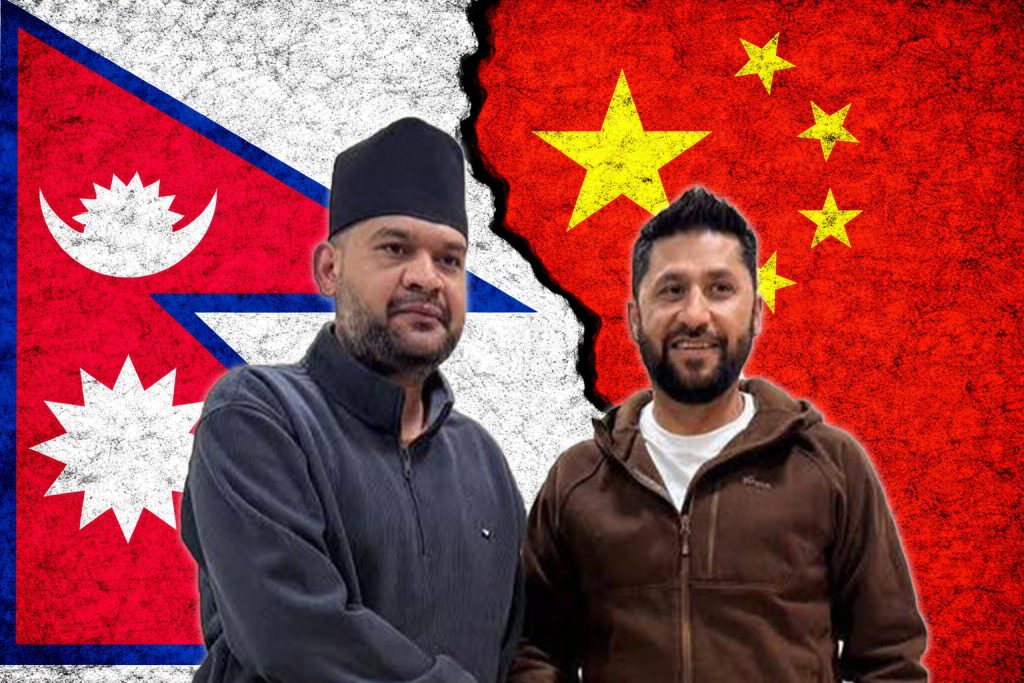
Balen Shah, the upcoming PM, in his election manifesto, has removed Nepal-China Friendship Industrial Park from the BRI flagship project. This has set concerned about RSP’s approach towards the Nepal-China Relations.
Beijing frames Nepal as a critical South Asian partner, but emphasizes patience and non-interference, signaling that deeper engagement depends on Kathmandu’s ability to maintain political stability and regional balance. For Nepal, the electoral outcomes present both a chance to leverage China’s economic overtures and a cautionary reminder of the complexities of navigating multi-polar geopolitics in a neighborhood defined by competing influences.
Within the paradigm of Nepal’s political realignment and Beijing’s Foreign Policy positioning, China perceives opportunities for Nepal to emerge as a constructive partner, not merely a peripheral actor. The new electoral mandates in Kathmandu offer Beijing a stable partner.
Nepal’s strategic location between India and China has always made it a focus of regional rivalry. The 2026 election results, which indicate a recalibration of domestic political forces, are likely to influence how Nepal manages its neighborhood policy. China can interpret this as a potential opening for deepening economic and infrastructural ties—particularly under frameworks such as the Belt and Road Initiative—while remaining cautious of Kathmandu’s need to maintain cordial relations with New Delhi, and further ‘Sky Friend’ Washington.
The message from Beijing is clear: Nepal can strengthen Sino-Nepalese cooperation without triggering regional tensions, but it must navigate the subtle competition between its two giant neighbors with care.
As Five-Years Plan, and two sessions have focused on AI, IT, and New Technology, Balen led the Government to engage with Beijing pragmatically, accelerating investment, technological collaborations, economic and infrastructure development. However, ‘skepticism of external interference’ in Nepal’s domestic political discourse poses the policy volatility and fluidity. In this volatility, China requires to exercise patience and nuanced diplomacy. China’s advocacy of multi-polarity will open a path to Nepal’s engagement with a multi-polar world; But Nepal should be cautious on hurting the Chinese security concern in this context, of the US strategic interest in the region to encircle China, and deter its influence in the region.
To conclude, with the changing global order, China’s stance through the two sessions of multi-polarity, Nepal’s political realignment has put forward a cautious optimism, encouraging Nepal to leverage multi-polarity to its advantage while strengthening bilateral cooperation with China, and for China, a cautious engagement through leveraging the policy fluidity, while expanding its strategic partnership.
Article published in Bizmandu in Nepali. Click here to read the Nepali version.
