Author name: Bidhur Dhakal

Nepal’s Political Realignment and the Tibet Factor: U.S. Strategy to Counter China’s Influence

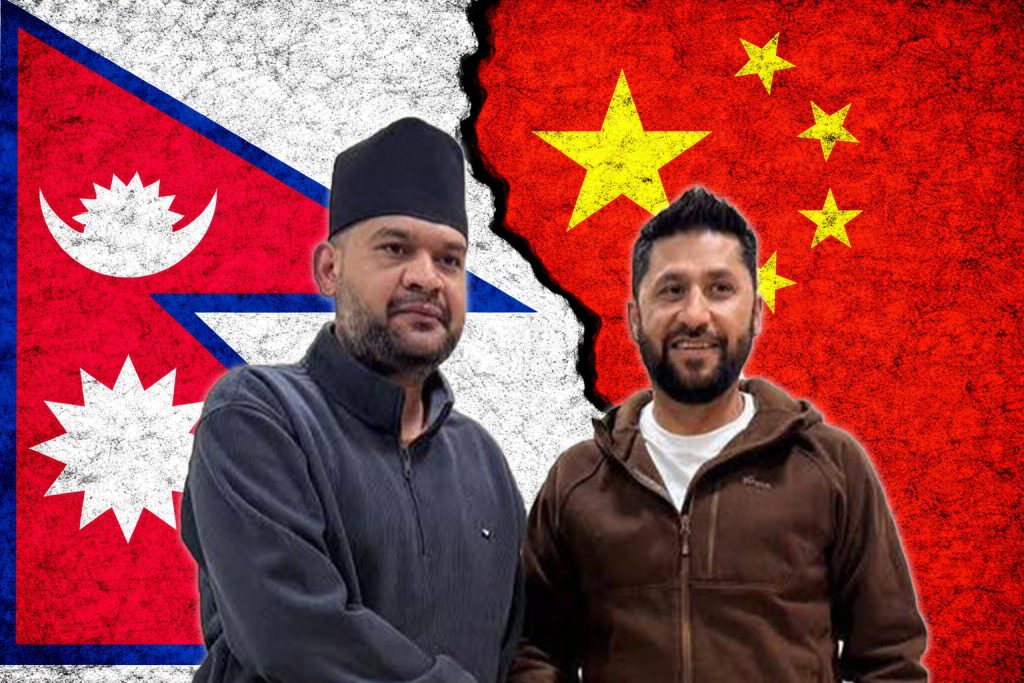
In March 2026, Nepal witnessed its most disruptive political transformation since becoming a republic. The Rastriya Swatantra Party (RSP), an anti-establishment force, a barely four-year-old party, swept the parliamentary elections, winning 182 of 275 seats. Balendra Shah (“Balen”), the 35-year-old former Kathmandu mayor and rapper, became prime minister on March 27. This youth-driven upheaval not only ended nearly two decades of dominance by the Nepali Congress and communist parties but also poses acute challenges to Nepal’s long-standing geopolitical balancing act – particularly regarding the sensitive issue of Tibetan refugee communities on its soil.  Nepal’s domestic handling of Tibetan exile groups, the intent behind U.S. funding for Tibetans and the “Countering PRC Influence Fund,” the strategic logic of American policy, and China’s deepening concerns have placed Nepal in a more vulnerable position of geopolitical rivalry. Recent political developments and accounts inside Nepal, including political earthquakes, operations of Tibetan Original Bloods (TOB), congratulatory messages to the Interim Prime Minister Sushila Karki from the Dalai Lama and to the New Government PM Balen from the Central Tibetan Administration (CTA)’s Sikyong Penpa Tsering, the US Congressional Report, and Consolidated Appropriations Act, 2026 have raised serious concern over so-called “Free-Tibet” activities in Nepal. Tibetan Exile Communities in Nepal For decades, Nepal has managed its Tibetan refugee population – estimated at tens of thousands, concentrated in the Boudha area of Kathmandu, and Western Nepal, Pokhara – through restrictions on their activities. Limiting these groups to religious and cultural activities, and curbing political activities, through serving its long-standing principle of “one China”.  However, the massive youth-led protests of September 2025, which forced Prime Minister K.P. Sharma Oli to resign, disrupted this delicate equilibrium in two significant ways. During the September 2025 unrest, a group calling itself “Tibetan Original Blood” (TOB) – composed of Nepali citizens of Tibetan descent – appeared on the streets. Dressed in distinctive black jackets emblazoned with TOB logos and dragon motifs. This group has been involved in catalyzing the escalation of the violence during the protest. TOB’s leader, Tenzing Dawa, was arrested for allegedly destroying public property, but the group’s social media posts openly expressed support for “Free Tibet” narratives. The Nepal Army subsequently acknowledged it was “closely monitoring” external infiltration, including TOB’s activities. For Beijing, the sight of an organized Tibetan-ethnic group participating in violent street politics on Nepali soil was a major alarm bell. After Balendra Shah’s swearing-in on March 27, 2026, the Central Tibetan Administration (the so-called “Tibetan government-in-exile” based in Dharamshala) issued a public congratulatory letter. Signed by Penpa Tsering, the message praised Shah’s rise as reflecting “the aspirations of Nepal’s younger generation” and highlighted the “centuries-old cultural and spiritual ties between Nepal and Tibet,” while expressing gratitude to the Nepali people and government for “hosting the Tibetan community.” The letter was widely circulated on social media. A separate media outlet focusing on “Tibetan Communities” reports the Dalai Lama’s congratulatory message to Balen has also been circulated. Notably, the Dalai Lama had also sent a congratulatory note to interim Prime Minister Sushila Karki in September 2025. The CTA’s open letter to Shah – timed to exploit Nepal’s political transition – was seen by observers as an attempt to expand political space for Tibetan exile institutions at a moment of governmental flux in Kathmandu. As of this time, the new RSP government has not publicly responded to the CTA’s congratulatory letter.  Foreign Minister Shishir Khanal has expressed the government’s stand that “firmly adheres to the One-China policy” and “does not foresee any major foreign policy shift.” Further, during the meeting with the Chinese ambassador, Home Minister Sudan Gurung has also expressed these commitments. Despite of these commitments, the circulation of the CTA’s letter and the heightened political activity of Tibetan-ethnic groups have already eroded some of the traditional “firewalls” in Nepal’s Tibet policy. The letter itself is not the main issue – it’s the chain of events: a youth-driven political upheaval, allegations of external involvement, increased Tibetan community activism, and then an open letter from the exile leadership. Each link alone might be manageable, but together they form a different picture.” The US Instrumentalization of Tibet to Counter the PRC Besides the “Tibetan Activities, the Anti-China Activities”, the domestic political shifts have provided the ground for the U.S. strategic engagement with Tibetan Communities in Nepal. The US. funding for Tibetan exile communities has bipartisan roots reaching back decades. In July 2025, after a temporary freeze under “America First” policies, the Trump administration restored $6.8 million for “Tibetans in South Asia.” A State Department statement justified the move as “a decades‑old bipartisan commitment to support the dignity and human rights of Tibetans and help them preserve their unique religious, cultural, and linguistic identity.” Further, it has continued in 2026 too. Most of these funds are channeled to refugee settlements in India, Nepal, and Bhutan, supporting health, education, and livelihoods for Tibetan exiles. In Nepal specifically, the money supports community services in Boudha and other Tibetan-majority areas. While presented as humanitarian aid, geopolitically, this funding serves as a low-intensity tool to keep the “Tibet issue” on the international agenda and to maintain leverage over Beijing. When the communities receiving such support become politically active during a national crisis, Washington gains indirect influence over Nepal’s internal calculus.  Far more consequential is the Countering PRC Influence Fund, authorized in the FY2026 Consolidated Appropriations Act of the US. The act appropriates no less than $400 million for a “Countering PRC Influence Fund” to “counter the influence of the Government of the People’s Republic of China and the Chinese Communist Party and entities acting on their behalf globally.” The funds can be drawn from multiple accounts – National Security Investment Programs, International Narcotics Control and Law Enforcement, Nonproliferation, and Foreign Military Financing – and may be transferred between accounts. The geographic scope is global, but Southeast and South Asia, including Nepal, are priority regions. The fund can support “grants, cooperative agreements, contracts, and other arrangements” with media outlets, civil society organizations, and academic institutions. In Nepal’s context,
Nepal’s Political Realignment and the Tibet Factor: U.S. Strategy to Counter China’s Influence Read More »

Kathmandu’s Political Realignments and China’s Two Sessions’ Foreign Policy Positioning

Bidhur Dhakal Nepal’s recent 2026 elections, marked by the realignment of the domestic political landscape, have significant implications for the Himalayan nation’s regional positioning and foreign policy outlook. From a Chinese perspective, these results are more than a domestic matter—they are a lens through which Beijing assesses both the trajectory of Nepal-China relations and the broader architecture of South Asian geopolitics. China consistently frames the current era as one of multi-polarity, a worldview emphasizing the diffusion of power away from a unipolar, U.S.-centric order. As Nepal was voting in the election on March 5, Chinese Deputies and political consultants were gathered in Beijing to discuss China’s policies for 2026, and further the 15th five-year plan (2026-2030). On Sunday, March 8, the Chinese Foreign Minister held a press conference on the sidelines of the fourth session of the 14th National People’s Congress and rejected the logic of “Major Power co-governance”. When asked questions about the idea proposed by the US President Donald Trump, Chinese FM Wang Yi not only rejected it, but also rejected the “seeking hegemony”.  “China will not follow the old path that a strong country is bound to seek hegemony, nor does it subscribe to the logic of major-power co-governance,” He had clarified it. He has stressed that the multipolar coexistence is the proper form of international order. Looking into the current political realignment in Nepal, the Beijing two sessions, and Wang Yi’s briefing with Median on Sunday, here tries to look from a Nepal-centric perspective. These developments offer insight into how Beijing is likely to interpret Kathmandu’s political shifts and adjust its approach in South Asia. China’s Strategic Framing of South Asia During the Two Sessions and the briefing of the FM Wang Yi, China reiterated a vision of multi-polarity and emphasized proactive diplomacy with neighboring countries, highlighting stability, connectivity, and economic cooperation as pillars of regional engagement. Though there is no mention of Nepal, Wang Yi’s remarks underscored China’s commitment to deepening ties with South Asian partners, which include Nepal, while promoting infrastructure, trade, and cultural exchange. Importantly, Beijing framed its diplomacy in a pragmatic, non-interventionist language, signaling respect for domestic sovereignty. Chinese Foreign Ministry Spokesperson Remarks on Nepal’s election on March 6, stressing the importance of Nepal as a strategic partner, and FM Wang Yi, remarks on the broader neighborhood policy can be aligned with China’s interest in Nepal, as a broader strategic alignment.  Nepal’s 2026 elections, which re-aligned the political landscape of Kathmandu, present both an opportunity and a risk to Beijing. The reshaping of political coalitions and the emergence of new parliamentary forces reflect a democratic vibrancy, but also potential unpredictability in foreign policy orientation. Beijing is likely to monitor how Kathmandu balances relations with India and other major powers, particularly given Nepal’s historical sensitivity to regional rivalries and the possibility of domestic debates influencing its foreign posture. The elections, therefore, present China with a nuanced challenge: how to engage constructively without appearing to favor specific political factions. Nepal’s Challenges and China’s Calculus Nepal’s post-election trajectory will test its ability to navigate multi-polar pressures. Internally, the electorate’s shifting preferences suggest a desire for stronger governance and economic opportunity, but the fragmented political landscape within the newly emerged Rastriya Swatantra Party (RSP) may slow decisive action on international cooperation. Furthermore, policy ambiguity of RSP also impacts foreign policy— especially with China, which has been practiced more through the political landscape. RSP’s ideological ambiguity with technocratic leadership, through populism, will likely lead China to interpret this as a signal to adopt patient, calibrated engagement, emphasizing long-term connectivity projects and economic incentives rather than overt political alignment. Furthermore, the 15th Five-Year Plan (2026-2030), along with large projects under BRI, China aims to refine BRI and engagement with partner countries through “small and beautiful public well-being projects.” Balen Shah, the upcoming PM, in his election manifesto, has removed Nepal-China Friendship Industrial Park from the BRI flagship project. This has set concerned about RSP’s approach towards the Nepal-China Relations. Beijing frames Nepal as a critical South Asian partner, but emphasizes patience and non-interference, signaling that deeper engagement depends on Kathmandu’s ability to maintain political stability and regional balance. For Nepal, the electoral outcomes present both a chance to leverage China’s economic overtures and a cautionary reminder of the complexities of navigating multi-polar geopolitics in a neighborhood defined by competing influences. Within the paradigm of Nepal’s political realignment and Beijing’s Foreign Policy positioning, China perceives opportunities for Nepal to emerge as a constructive partner, not merely a peripheral actor. The new electoral mandates in Kathmandu offer Beijing a stable partner. Nepal’s strategic location between India and China has always made it a focus of regional rivalry. The 2026 election results, which indicate a recalibration of domestic political forces, are likely to influence how Nepal manages its neighborhood policy. China can interpret this as a potential opening for deepening economic and infrastructural ties—particularly under frameworks such as the Belt and Road Initiative—while remaining cautious of Kathmandu’s need to maintain cordial relations with New Delhi, and further ‘Sky Friend’ Washington. The message from Beijing is clear: Nepal can strengthen Sino-Nepalese cooperation without triggering regional tensions, but it must navigate the subtle competition between its two giant neighbors with care. As Five-Years Plan, and two sessions have focused on AI, IT, and New Technology, Balen led the Government to engage with Beijing pragmatically, accelerating investment, technological collaborations, economic and infrastructure development.  However, ‘skepticism of external interference’ in Nepal’s domestic political discourse poses the policy volatility and fluidity. In this volatility, China requires to exercise patience and nuanced diplomacy. China’s advocacy of multi-polarity will open a path to Nepal’s engagement with a multi-polar world; But Nepal should be cautious on hurting the Chinese security concern in this context, of the US strategic interest in the region to encircle China, and deter its influence in the region. To conclude, with the changing global order, China’s stance through the two sessions of multi-polarity, Nepal’s political realignment has put forward a cautious optimism, encouraging Nepal

Kathmandu’s Political Realignments and China’s Two Sessions’ Foreign Policy Positioning Read More »

INSTABILITY IN NEPAL’S INTERNAL POLITICAL SETTING: ITS IMPACT ON GEO-POLITICS

Nepal, landlocked by Asian giants, Dragon and Tiger, is struggling with its internal political instability. On the one side, China is emerging as leader of Global South, extending its influence to the South Asia. On the other hands, India itself pursue as the leader of South Asia. The US is increasing its engagements in the region to deter China. Nepal situated in the geopolitical sensitive location striving with its internal political turmoil. Lack of the incom-petency of political leadership, internal conflict between political parties, is causing unstable government. This instability has raising public dissatisfactions. With observations of the internal politics and analyzing the available literature, this article concludes, Nepal is in risk of being pawn in the geopolitical competition and the battle ground for these competitions. Download Full Article Alternative Download Link

INSTABILITY IN NEPAL’S INTERNAL POLITICAL SETTING: ITS IMPACT ON GEO-POLITICS Read More »

Influence of Buddhism on Chinese Civilization: A Soft Power Tool of Modern Diplomacy

Abstract The integration of Buddhism in China and Chinese Civilization could be traced back to the development of the ‘Silk Road.’ From the reign of modern-day since the reign of various families, history also has a rally with development and expansion of activities. The rise and downfall of Buddhism in China are witnessed during the changes in the regime. Since the foundation of the People’s Republic of China (PRC), China does not recognize religion. However, After the end of the Cultural Revolution and China’s Economic Reform and Opening Up, China loosens the practice of religious activities. This paper will analyze how Buddhism has influenced the Chinese civilization. With a comprehensive analysis of history and literature, this paper finds that Buddhism is a part of Chinese Civilization and a manifestation tool of Chinese Diplomacy. Keywords: Buddhism, Chinese Civilization, Cultural Heritage Download Full Article , Alternative Download Link

Influence of Buddhism on Chinese Civilization: A Soft Power Tool of Modern Diplomacy Read More »

Scroll to Top